Short answer
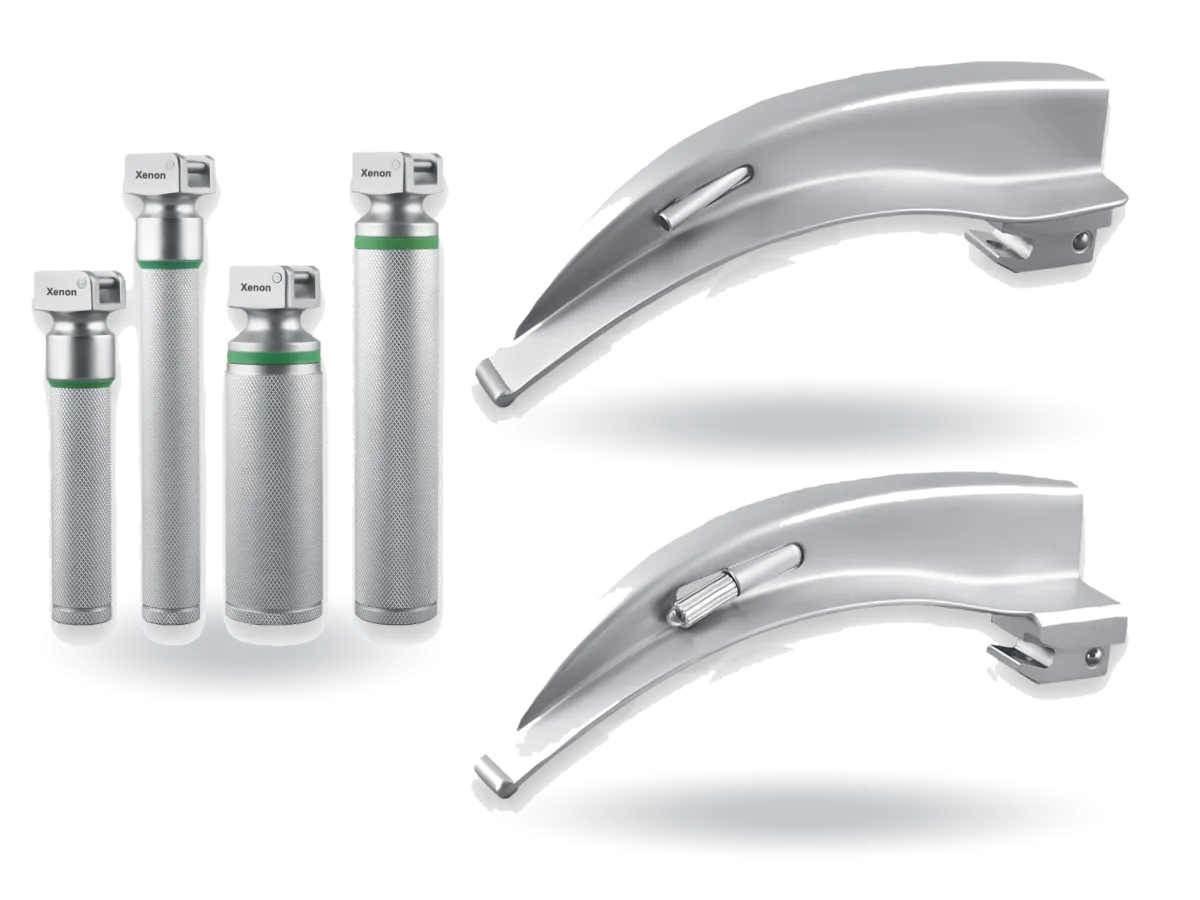
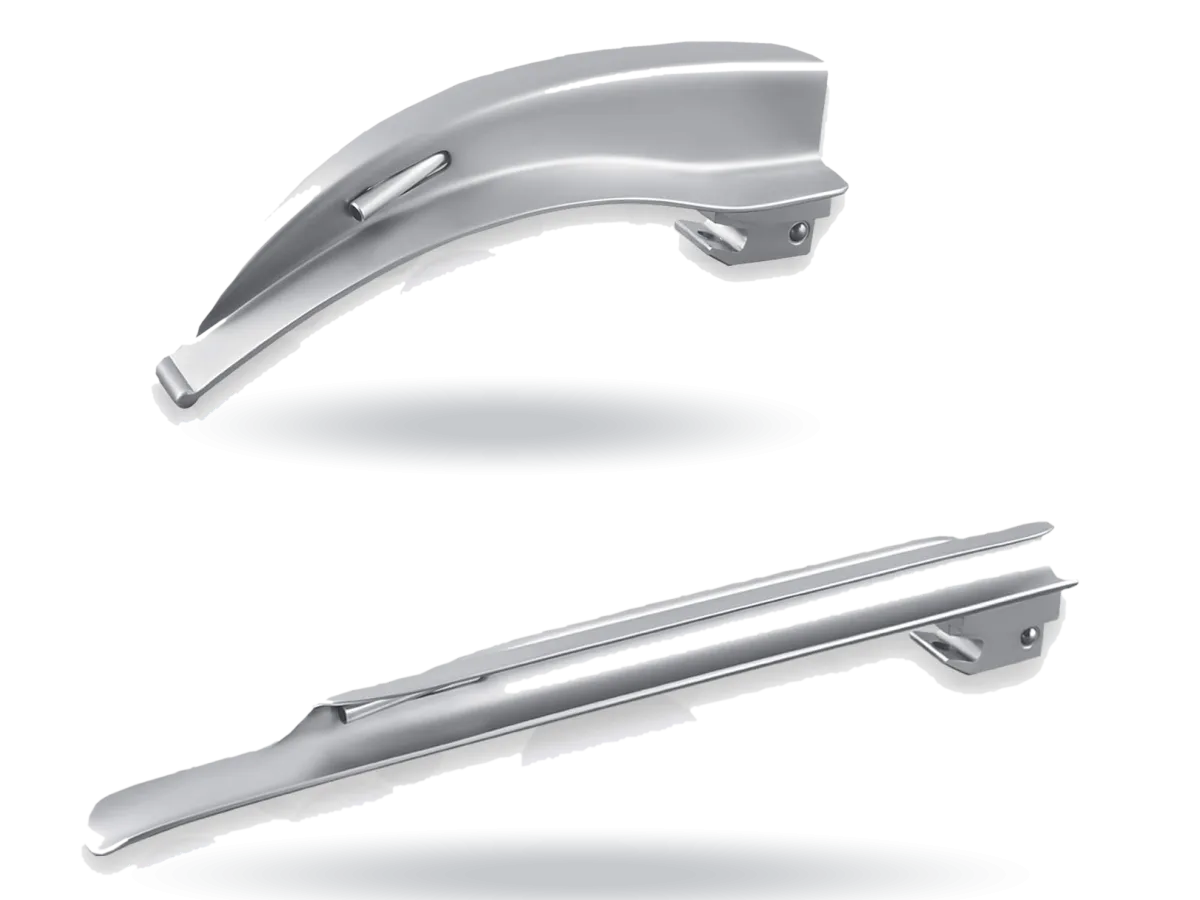
A reusable blade is made of stainless steel. After every patient it is cleaned and then high-level disinfected or sterilised, as its instructions for use state. A single-use blade is used for one patient and then discarded, so there is nothing to reprocess.
Reusable blades cost more to buy but are used many times. Single-use blades cost less each but are bought again for every use. Which works out cheaper per use depends on each hospital's reprocessing costs, its volumes and its infection-control policy.
The difference at a glance
| Reusable | Single-use | |
|---|---|---|
| Material | Stainless steel | Metal, metal with a plastic base, or plastic |
| After use | Cleaned, then high-level disinfected or sterilised as the instructions for use state | Discarded |
| Price per blade | Higher | Lower |
| Costs that repeat | Reprocessing, inspection, lamp or light-guide care, repairs and replacement | A new blade for every use, plus disposal |
| Condition at each use | Depends on reprocessing and inspection | New for every patient |
| Stock | A small stock used again and again | A larger stock that is used up and reordered |
| Waste | Little solid waste; reprocessing uses water, chemicals and energy | One blade per use |
| Codes in our range | AL-14xx fiber optic, AL-12xx conventional | AL-18xx fiber optic, AL-16xx LED |
Reprocessing: the cost that is easy to miss
A laryngoscope blade touches the mucous membranes of the mouth and throat. Under the classification used by the US Centers for Disease Control and Prevention and by most hospital infection-control teams, that makes it a semicritical item. After every patient it needs at least high-level disinfection, and many hospitals sterilise blades instead.
Each cycle is a small process of its own: cleaning, disinfection or sterilisation, drying, inspection, packaging, storage and, in many hospitals, tracking. It needs trained staff, equipment, chemicals and time. Published studies have found contamination on reusable blades that were stored as ready for use, which is one reason some hospitals choose single-use blades for some or all areas.
None of this makes reusable blades a poor choice. Where a central sterile services department runs well, reusable blades are reprocessed safely every day. The point is that reprocessing has a real cost, and it belongs in any comparison.
How to compare cost per use
Comparing the price of a reusable blade with the price of a single-use blade tells you very little. Compare the cost of one use instead.
Reusable blade, cost of one use
Single-use blade, cost of one use
Use your own figures. Published cost studies reach different conclusions because reprocessing costs, labour rates and the number of intubations differ widely from one hospital to the next. A blade that is used several times a day in a busy theatre spreads its purchase price very differently from one kept in an ambulance.
Where each one fits
Reusable blades
Usually chosen where reprocessing is well organised.
- Operating theatres with a central sterile services department
- Steady, predictable numbers of intubations
- Budgets that allow a larger initial purchase
Single-use blades
Usually chosen where reprocessing is hard to organise or must be avoided.
- Emergency departments, ambulances and wards
- Isolation and infection-sensitive areas
- Emergency trolleys and back-up stock
Many hospitals use both: reusable blades in theatre and single-use blades where speed and simplicity matter more. For a distributor, that usually means offering both in the patterns and sizes your customers use.
Single-use blades: metal or plastic
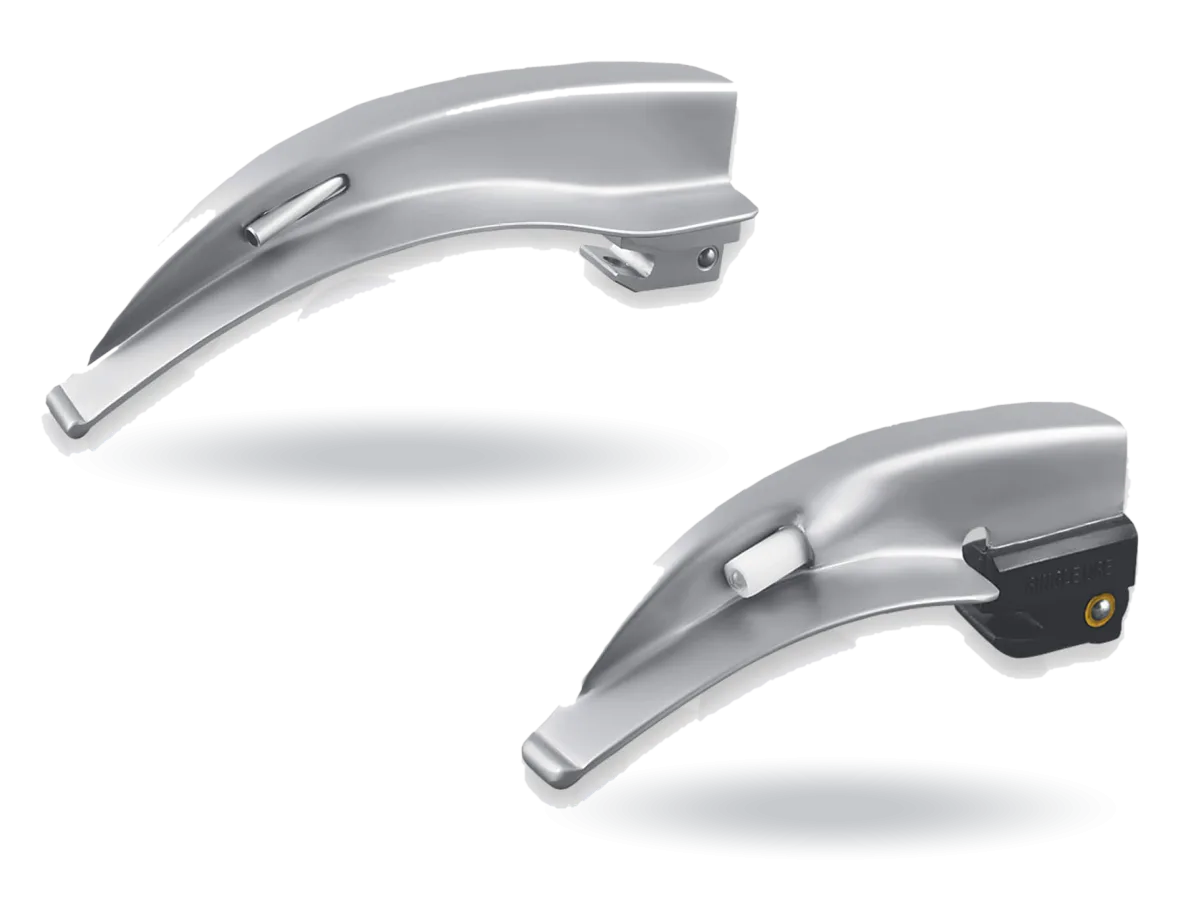
Single-use blades are made in three main constructions. Metal blades are closest in feel and stiffness to reusable steel blades. Semimetal blades combine a metal blade with a plastic base. Plastic blades are the lightest and usually the lowest in price, but they flex more than metal.
Our single-use range includes semimetal and metal blades for both light systems: single-use fiber optic blades with an acrylic light guide, and single-use LED blades for conventional handles.
Handles stay reusable
Single-use blades are used on the same handles as reusable blades of the same light system. A hospital switching some areas to single-use blades keeps its handles, which are cleaned and disinfected between patients as their instructions for use state. Fiber optic single-use blades need fiber optic handles, and LED single-use blades need conventional handles. Our guide to fiber optic and conventional laryngoscopes explains why.
Questions
Are single-use laryngoscope blades sterile?
It depends on the product. Some single-use blades are supplied sterile and others are supplied clean but not sterile. The label and the instructions for use state which. Ask us for the specification of the codes you need.
How many times can a reusable blade be reprocessed?
There is no single number. It depends on the blade, the reprocessing method and how the blade is handled. Follow the instructions for use, inspect the blade before every use, and replace it if it is damaged or the light is weak.
Do single-use blades fit standard handles?
Yes, when the blade and handle use the same light system. In our range, AL-18xx single-use fiber optic blades fit fiber optic handles, and AL-16xx single-use LED blades fit conventional handles. Fiber optic vs conventional laryngoscopes
Can a single-use blade be reprocessed and used again?
No. A single-use blade is designed and labelled for one patient. It is discarded after use.
This guide describes products and general practice for buyers. It does not replace clinical training or the instructions for use supplied with each device. The choice of device for a patient is made by the clinician.